01 / Vision
To open a thoughtful way into India.
We hope The Tirtha Way becomes a trusted name in spiritual and cultural travel—helping people from around the world meet India with understanding, while growing into a strong, sustainable company.
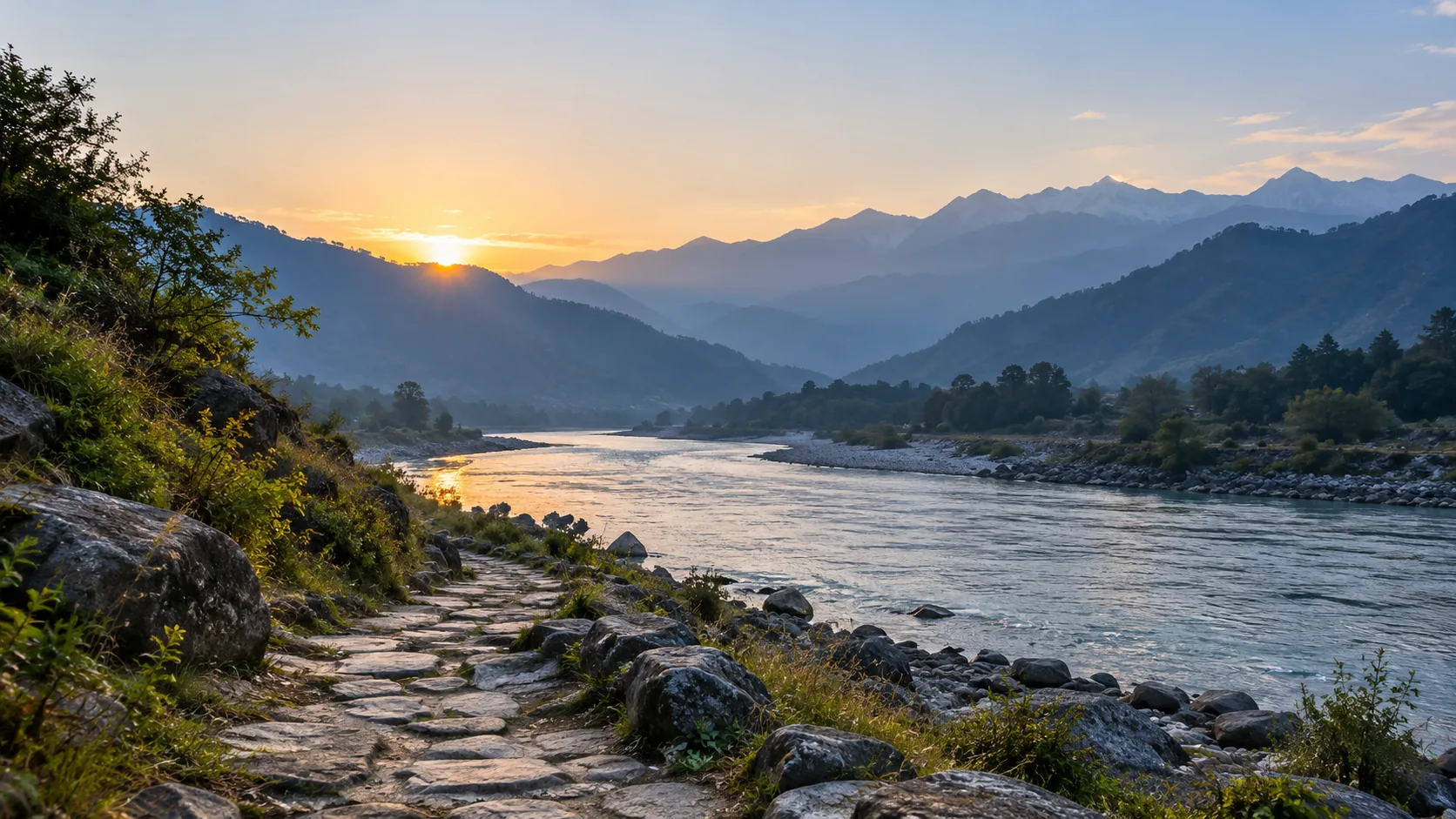
India has places that ask you to pause. We create thoughtful journeys to meet them—with time to listen, learn and find your own way into the experience.
Not a checklist of sights, but a chance to meet the spirit of a place—in its landscape, traditions, stories and silences.
The Tirtha Way was founded by Dhruv Pareek and his sister with a simple intention: to help visitors experience India’s spiritual places with a little more time, context and openness.
Dhruv is a retired Wing Commander of the Indian Air Force and a lifelong traveller. His years in uniform taught him the value of preparation, perspective and the people behind every place. Travel has taught him to slow down, listen and notice what a map can’t show.
For us, spiritual travel is personal. A cave, a temple on a hill or a river at first light may hold a particular energy for you; another traveller may feel something different. We want to help you arrive with respect and make room for your own experience.
We’re building a business with care for the guest, the places we visit and the communities whose traditions give them life.
We hope The Tirtha Way becomes a trusted name in spiritual and cultural travel—helping people from around the world meet India with understanding, while growing into a strong, sustainable company.
We bring together spiritually significant places, local stories and traditions, and the time to reflect—then organise each journey with integrity, comfort and attention to detail.
Near Rishikesh, we’re drawn to places that offer different ways to pause: in a forest cave, on a mountain ridge, beside a waterfall or among the everyday rhythms of town.
A riverside cave and a quieter stretch of the Ganga—an invitation to step away from the day’s noise and sit with your own thoughts.
A hilltop temple above the valley, where the journey up and the changing light can be as memorable as the view from the top.
A forested walk toward the sound of falling water, with room to take the path slowly and notice the landscape around you.
A quieter corner of the foothills where river, forest and village life make a welcome change of pace from the busy town.
These are starting points, not fixed packages. We shape each itinerary around your interests, pace and travel dates.
Some stories are rooted in sacred texts; others have travelled through local memory. Together, they offer one way to understand why rivers, temples and mountain paths hold meaning here. Every visitor may experience these places differently.

Rishikesh is commonly connected with Hrishikesha, a name for Vishnu meaning “Lord of the Senses.” In a local temple tradition, the sage Raibhya’s austerities pleased Vishnu, who promised to remain here as Hrishikesh Narayan. Bharat Mandir is dedicated to this form of Vishnu and is regarded as one of the town’s oldest sacred places.
Local tradition associates Rama with a period of penance in Rishikesh. Lakshman is said to have crossed the Ganga here on a jute-rope bridge; the present Lakshman Jhula carries the memory of that crossing in its name. These are stories cherished in the region, rather than accounts established by contemporary historical records.
The name is often translated as “sands of the sages.” Local memory links this stretch of the Ganga’s bank with sages who came here to meditate and practise austerities. Even today, its quieter river edges and ashrams are part of Rishikesh’s contemplative landscape.
In the Samudra Manthan story, gods and asuras churn the cosmic ocean and a deadly poison, Halahala, emerges. Shiva takes it into his throat to protect creation; his throat turns blue, giving him the name Neelkanth. A regional tradition connects this episode with Neelkanth Mahadev Temple near Rishikesh.
A local legend says Shiva’s wedding procession paused at Bhoothnath Temple on its way to marry Sati. The story lends the shrine an intimate place in the wider landscape of Rishikesh’s Shiva traditions.
A well-known Mahabharata-linked tradition tells how the Pandavas sought Shiva after the great war. Shiva, unwilling to meet them, took the form of a bull and disappeared into the earth. The parts of his body are said to have appeared at five Himalayan shrines: Kedarnath, Tungnath, Rudranath, Madhyamaheshwar and Kalpeshwar. Together they are worshipped as the Panch Kedar.
In a Garhwali folk tradition, the flute-playing shepherd Jeetu Bagdwal draws the attention of nine Aanchhri sisters, often described as mountain spirits or fairies. The tale moves between music, promise and loss, and remains part of the folklore associated with Khait Parvat.
The cave shrine of Patal Bhuvaneshwar is associated with the Manas Khand section of the Skanda Purana. A regional account says King Rituparna discovered the cave; its limestone formations are understood by devotees as natural forms of deities. For visitors, the cave is also a striking meeting of geology, worship and imagination.
Devbhoomi means “Land of the Gods.” The name reflects Uttarakhand’s long sacred geography: the Char Dham pilgrimage, revered rivers and their confluences, mountain shrines and routes shaped by generations of pilgrims. It is also a living place, where local communities carry traditions forward in everyday life.
These accounts come from scripture, regional tradition and folklore in different ways. We share them with respect for that distinction; they are invitations to learn, not promises about what any traveller will feel.
We believe a good spiritual journey begins before arrival—with honest conversation about what you hope to experience, how you like to travel and what will help you feel at ease.
We share context without telling you what you should feel. We respect local customs and keep the experience personal, grounded and thoughtfully organised. The meaning you find along the way is yours to discover.
Tell us what has brought you to this journey—quiet, culture, a particular place, or simply the wish to see India differently. We’ll take it from there, one conversation at a time.
Prefer email? Write to plan@thetirthaway.com.